
Those in favour of the centers use creation of jobs as a leading point. New infrastructure must stimulate the economy and therefore trickle down to residents, right? When it comes to the new dramatic changes in the industry, the answer is not exactly. Using one data center ran by AOL from the 90’s as an example, at its peak it employed 5,300 employees. Today, that campus has since been demolished and replaced with three large data center facilities, on that same piece of land approximately 100 to 150 people will be employed. That’s the difference in the existing market and how things used to be operated

Data hosting, processing, and related service jobs in the United States in the last four decades.
One of the main points arguing against data centers is their dis-proportionate use of local resources, thus creating a strain on local infrastructures. These centers are no longer invisible infrastructure. They are evident, resource-intensive neighbors whose impacts (noise, heat emissions, and land loss) are experienced locally. The gap between localized impacts and global benefits leaves communities frustrated, feeling as though they bear more costs than gains. Especially when facilities are developed without meaningful engagement or consideration from local groups.
Annual U.S. Electricity Consumption by Data Centers
(Terawatt-hour)

Noise pollution is one of the physical impacts that residents of these communities face when living next door to new data centers. Starting with the construction of the buildings themselves, work completed by heavy machinery right outside their front doors for on average of 2-3 years (the duration of construction). Once they are up and running, diesel generators, heating, ventilation, and air conditioning systems also create a constant hum that can be audible to neighboring homes and wildlife. Data centers can generate noise levels that may exceed 90 decibels, levels above 85 decibels are harmful to hearing. Residents that have to endure this may also face mental and emotional distress caused by the noise, some citing increased anxiety and fatigue from lack of sleep.
Additionally, it doesn’t help soothe the concerns of residents when decisions are made silently, often without the awareness of the community itself. Development starting is sometimes the first indication of a center being implemented to local residents. At this point in the process, change is usually out of the question. Or, communities are aware of the development in its early stages, but their voices are dismissed and ignored altogether. An example being Project Blue in Tucson, AZ. Local groups fighting against the development of a large Amazon data center campus. Residents show up, express concerns, and vote no against its development. However, Amazon and local government still continue to progress on implementing the center into the surrounding environment.
Images from nodesertdatacenter.com surrounding public response to Project Blue


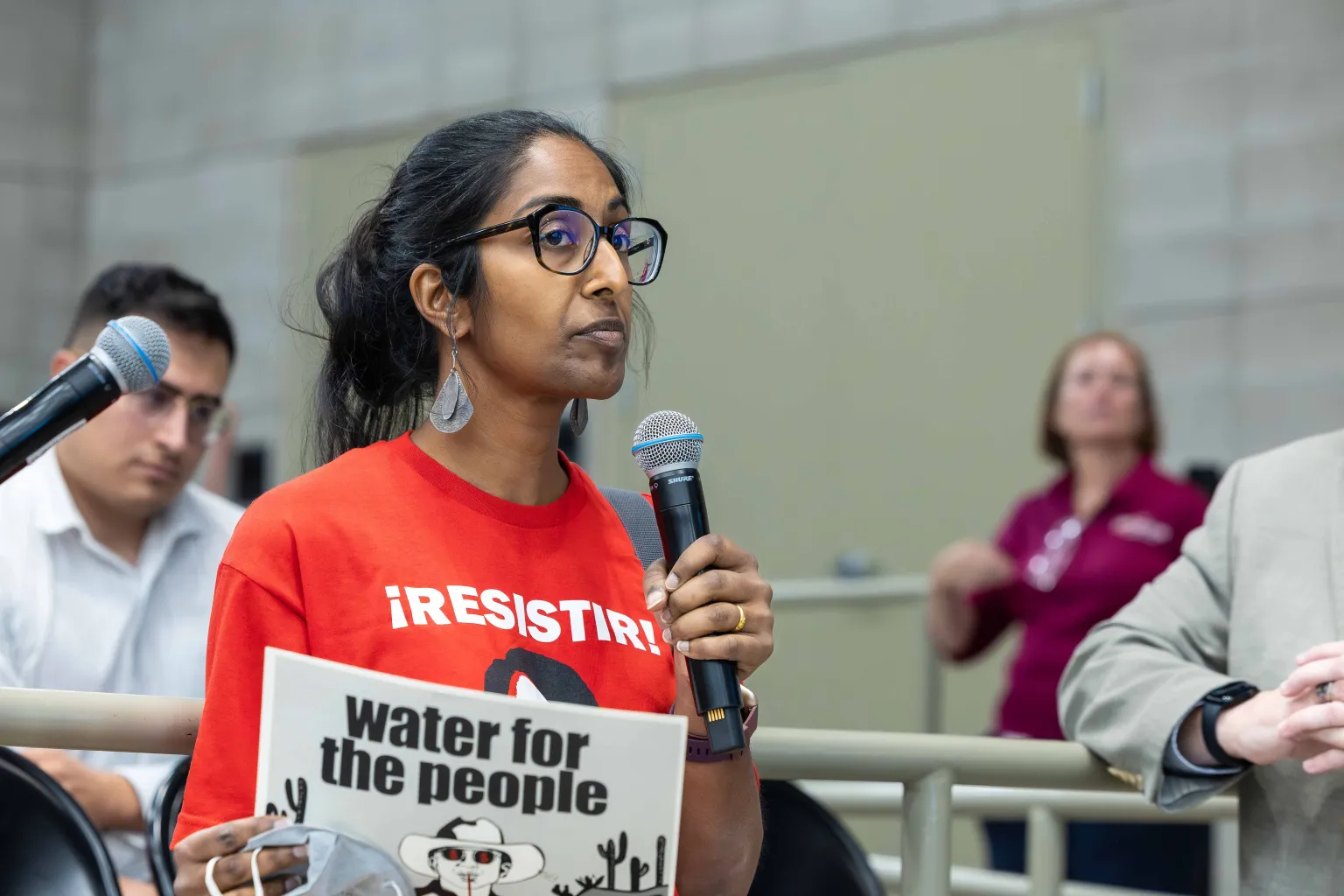
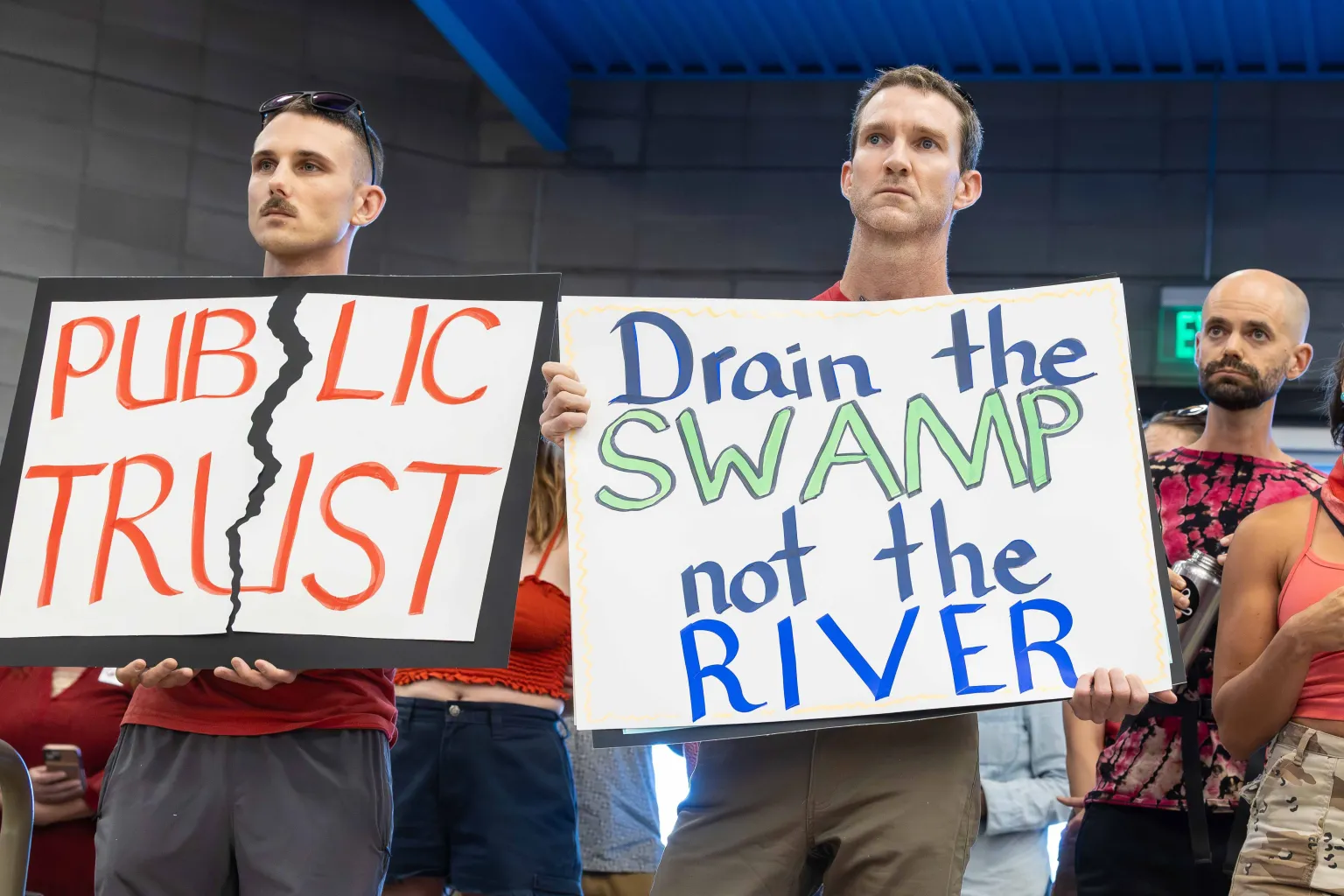

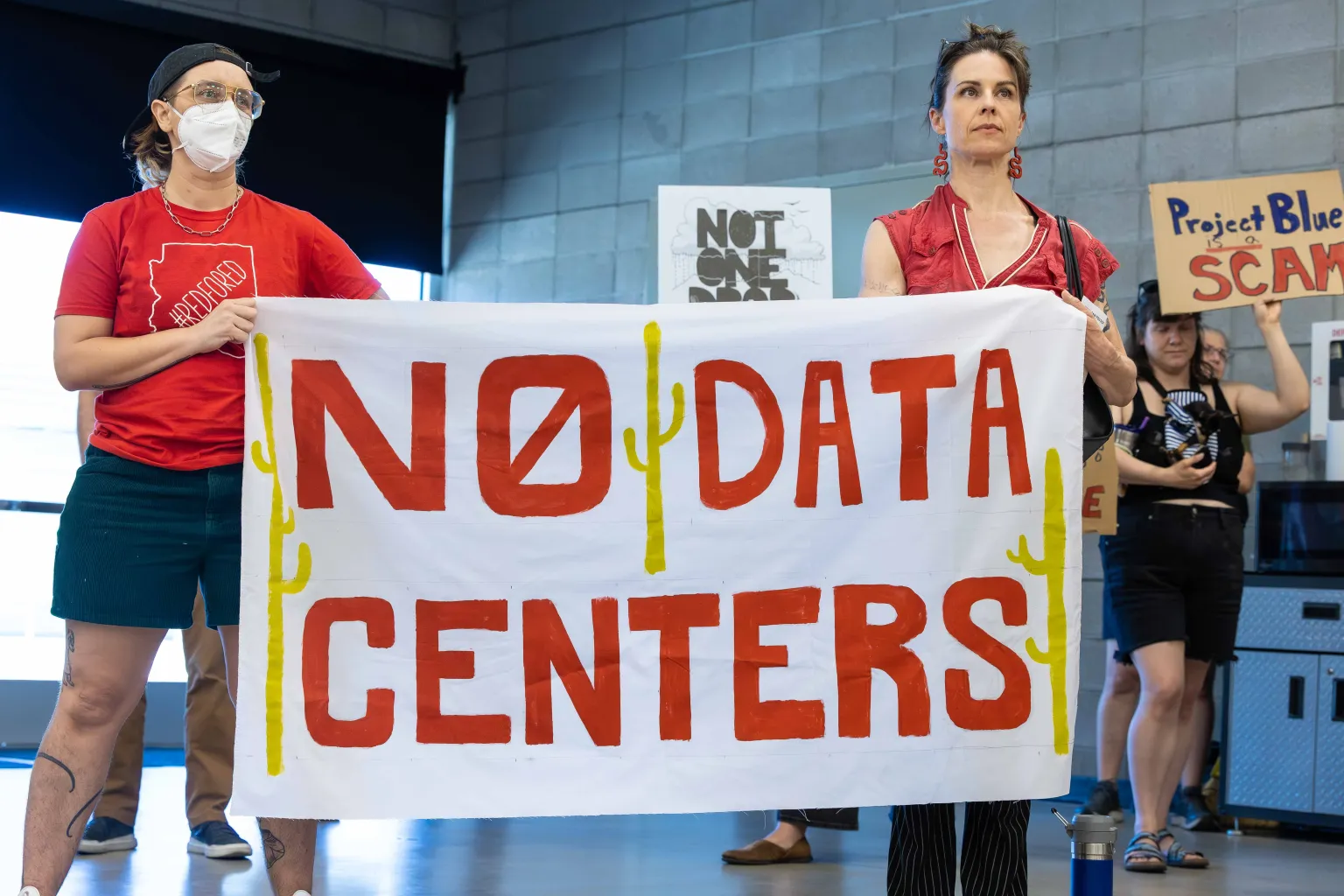
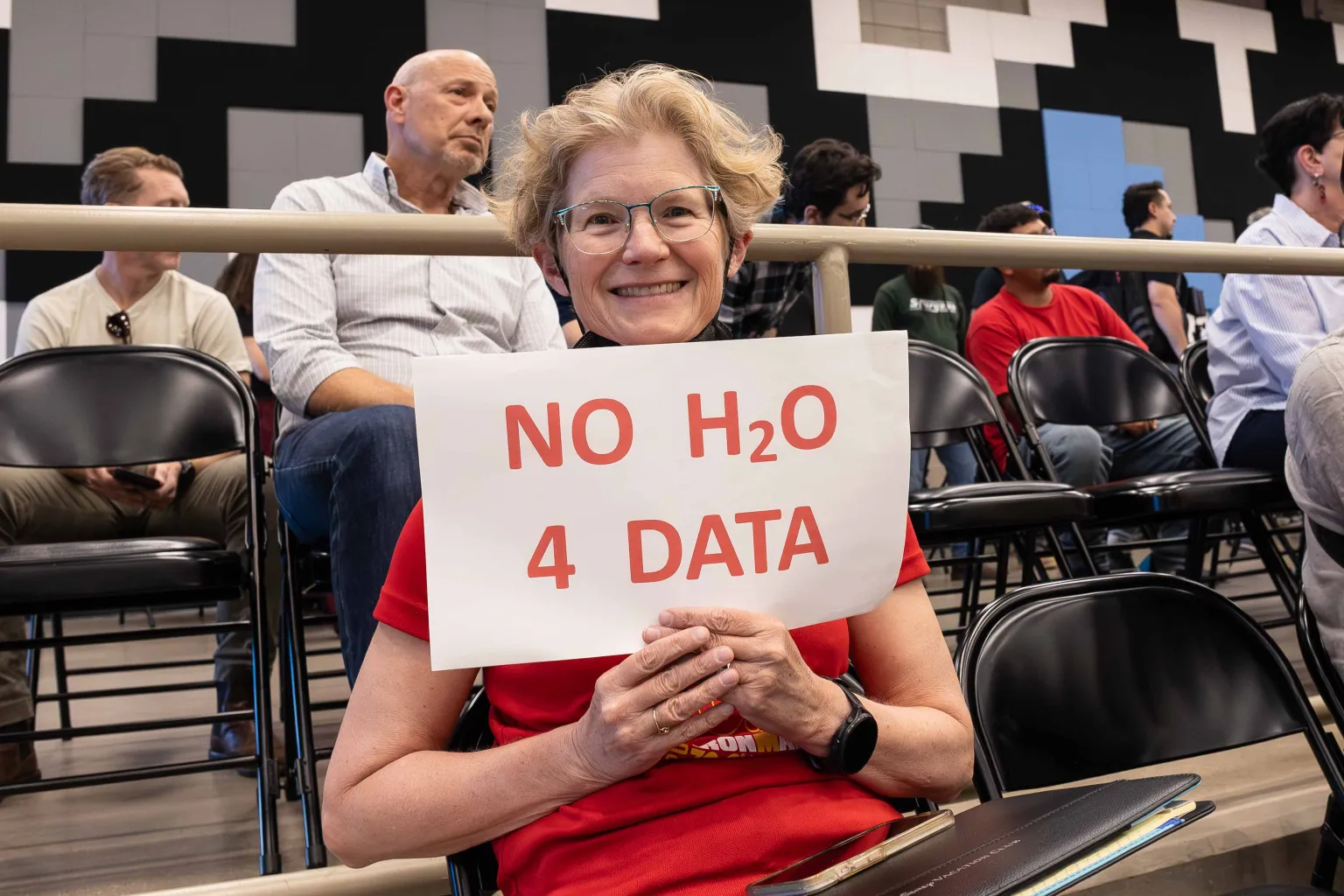
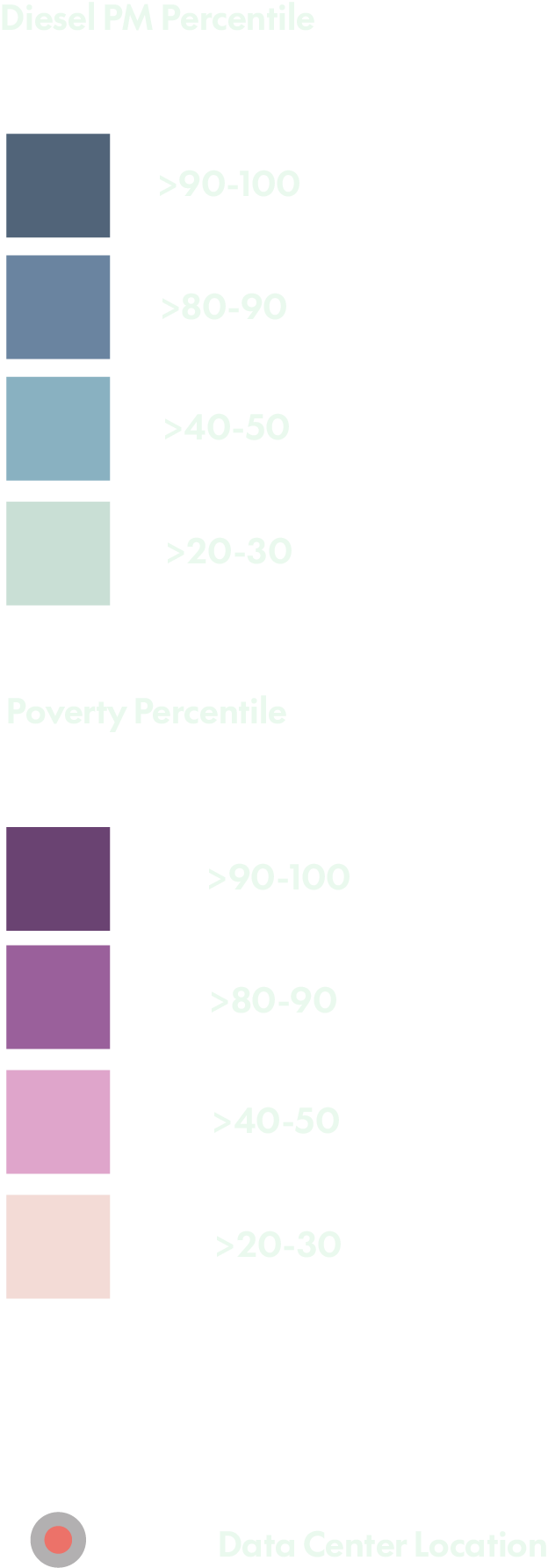
Another thing to consider, not all development sites are created equal for these buildings. An example being Californian communities that have a high concentration of data centers. By examining the existing pollution burden and diesel levels these communities face in comparison to a map indicating existing centers, a clear correlation between poor public health indicators and data center locations in California is revealed. This isn’t to say data centers caused this poor public health; instead it shows that data centers are clustered in already polluted areas with vulnerable outcomes. These areas are most notably polluted by diesel particulates and use of fossil fuels, producing fumes residents have no other choice but to breathe in.
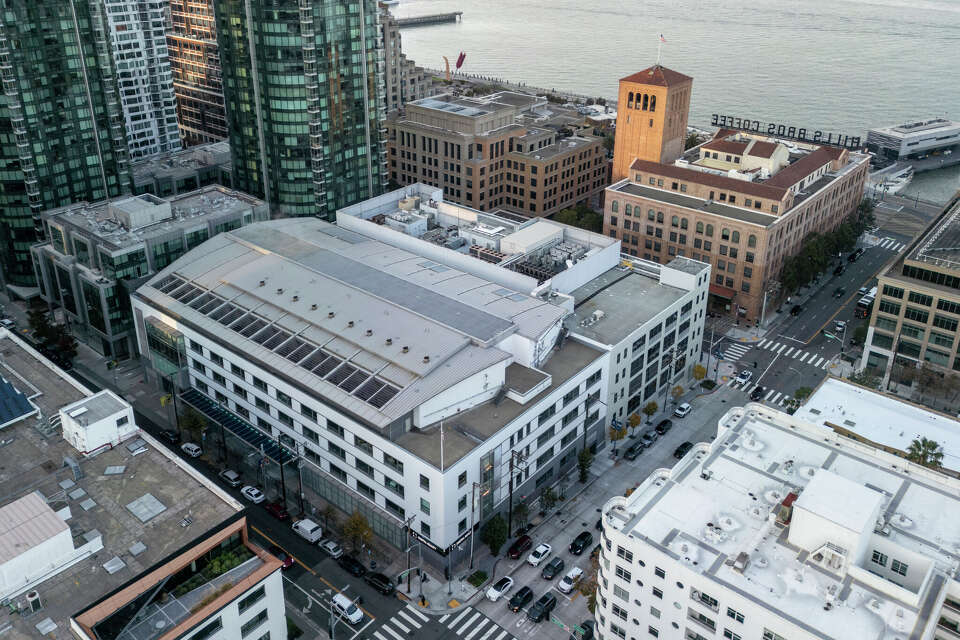
Aerial view of Bay Area Digital Realty center.
Maps comparing poor air quality to poverty levels in one of California’s most concentrated data center locations.
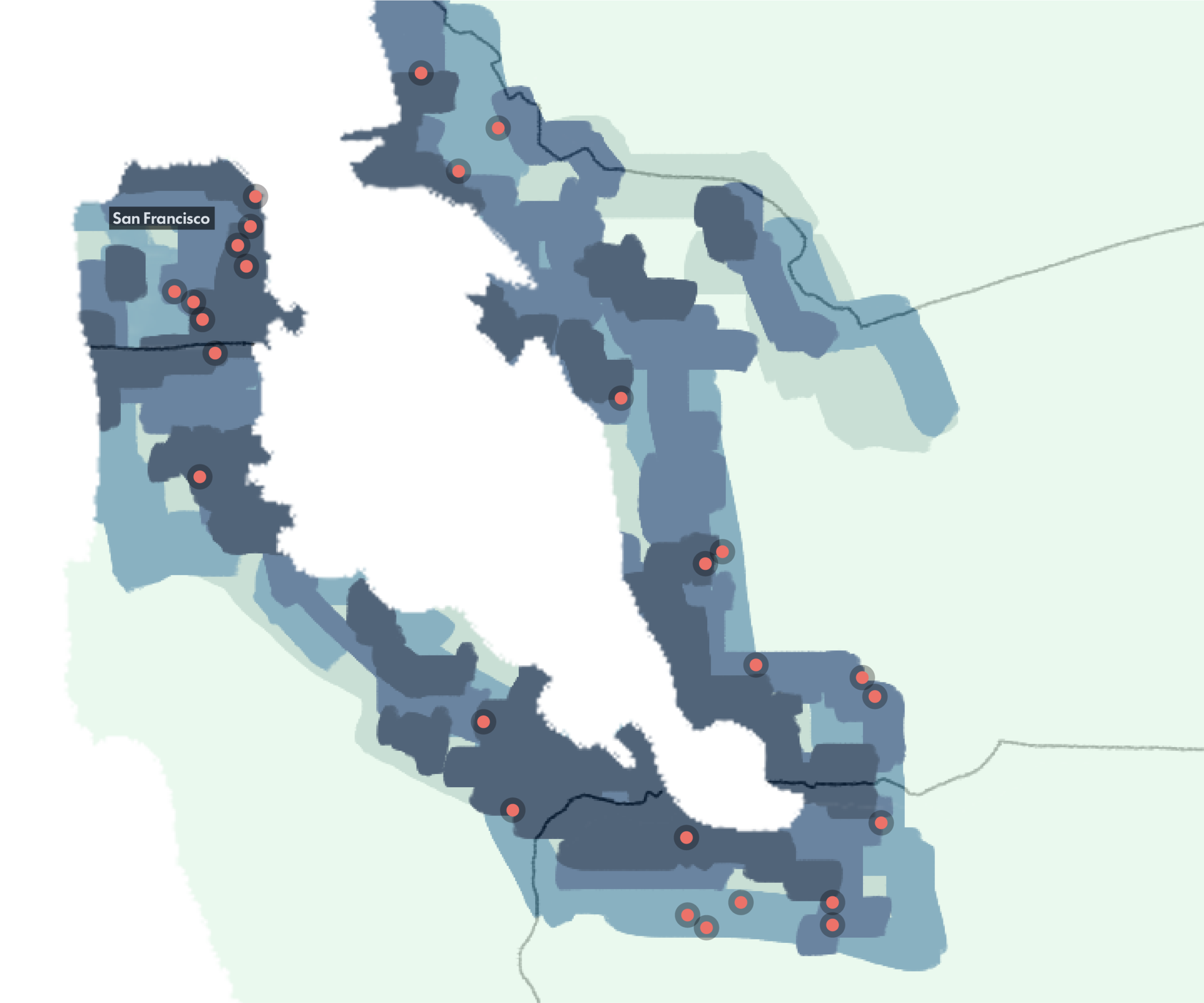
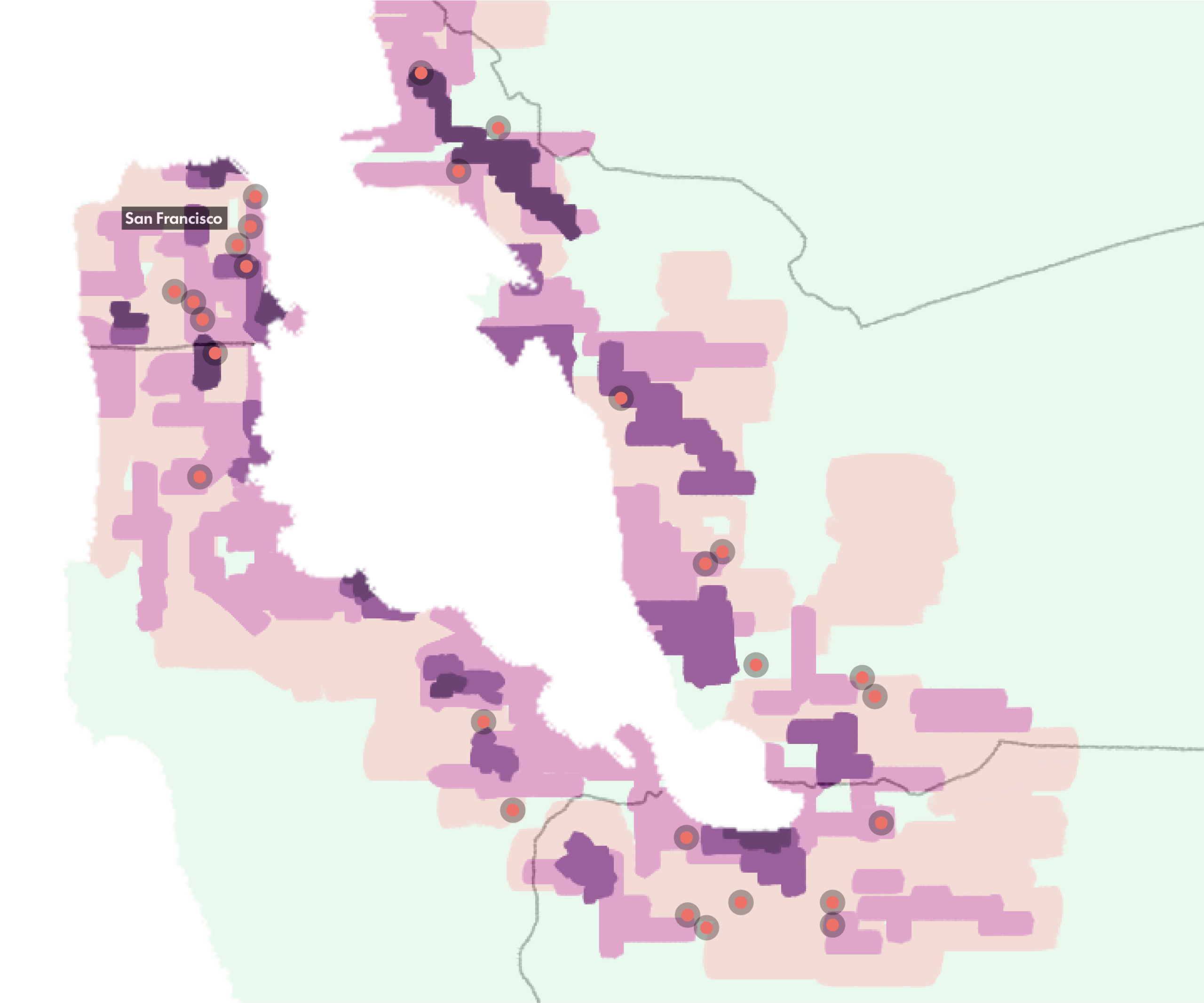
Oftentimes these communities are the results of environmental inequity. Meaning an area primarily populated by minorities and low-income families is intentionally targeted as a site of polluting and waste facilities. These health facts mentioned above with disproportionately affect these communities and exacerbate existing health disparities.
Data centers are set for a period of exponential growth, quickly scaling to meet growing compute and data demand driven by AI and digitalisation. The issue of digital growth vs physical capacity is raised. Local and national authorities must manage the demand for land alongside competing priorities such as housing, transport, industry, biodiversity protection, and climate resilience. This creates a conflict between the pursuit of economic opportunity, competition over resources, and community sentiment. Each region’s tradeoff varies based on local factors, regardless they must be managed cautiously. Community frustration and fear arises from increased utility bills, land/environment loss, and pollution of the land that surrounds their homes.
Another victim in this discussion is our climate. The rapidly growing energy demands of data centers have forced states to delay the retirement of coal and gas plants and even consider building new fossil fuel facilities. Centers currently cannot fully operate on renewable energy alone, solar and wind are inconsistent and cannot meet the operation time of the computers. Promises of greener solutions are made to communities but the transition from fossil fuels is often delayed or abandoned completely.
By the looks of things, data centers aren’t going away anytime soon. Moving forward, the question isn’t, “how do we eliminate data centers completely?” It’s more so, “how can they be better neighbors?”. Change is already happening, slowly and on a small-scale. As a way to win public favor and lower risk of delay in the projects, developers are opting for more community engagement. More socially conscientious designs are being put forward in plans for the buildings, collaboration with communities also leads to a more positive and constructive approach towards project development. Trust can be established between communities and local authorities, leading to a beneficial relationship down the road. Additionally, community priorities can be emphasized, such as impacts on local resources and the environment.
However, if more sustainable development is to become the norm, communities cannot take the heat of these corporations. The truth is, it is still easier and cheaper for developers to move in silence and complete the projects in whatever way benefits them most.
Today, we co-exist with data centers as our neighbors. They reside within our communities and their presence impacts us. But one day they will also be our ancestors, the residual impact they leave on the land they occupy should also fuel the fight towards sustainability.